

Hey there,
There was a time the whole goal was $20.25 an hour.
(Stay with me till the end & I promise you will leave motivated to reevaluate your worth)
Not twenty.
Not twenty one.
Twenty dollars and twenty five cents.
A number so specific you know it was real.
Three weeks ago I told you about the ceiling you inherit.
The number you absorb before you're old enough to question it.
This is what that ceiling sounds like when it talks.
The quote that started the fight
Last month a referral came in. A big job. Real scope.
Over two hundred hours of work once I mapped it and the first thoughts weren't about the work.
It was..”Can I actually do this?”
This wasn’t some small business nobody had hear of. It was a global brand almost everyone reading this would recognize.
Lets just say the guy behind it has spent a few decades convinging people to change their state, raise their standards, and occasionally walk on fire….
So I said: YES
That's the ceiling talking. Permission…not effort.
I chose to take the risk anyway and when they asked for my hourly rate, I sat down and calculated what my skill set is actually worth.
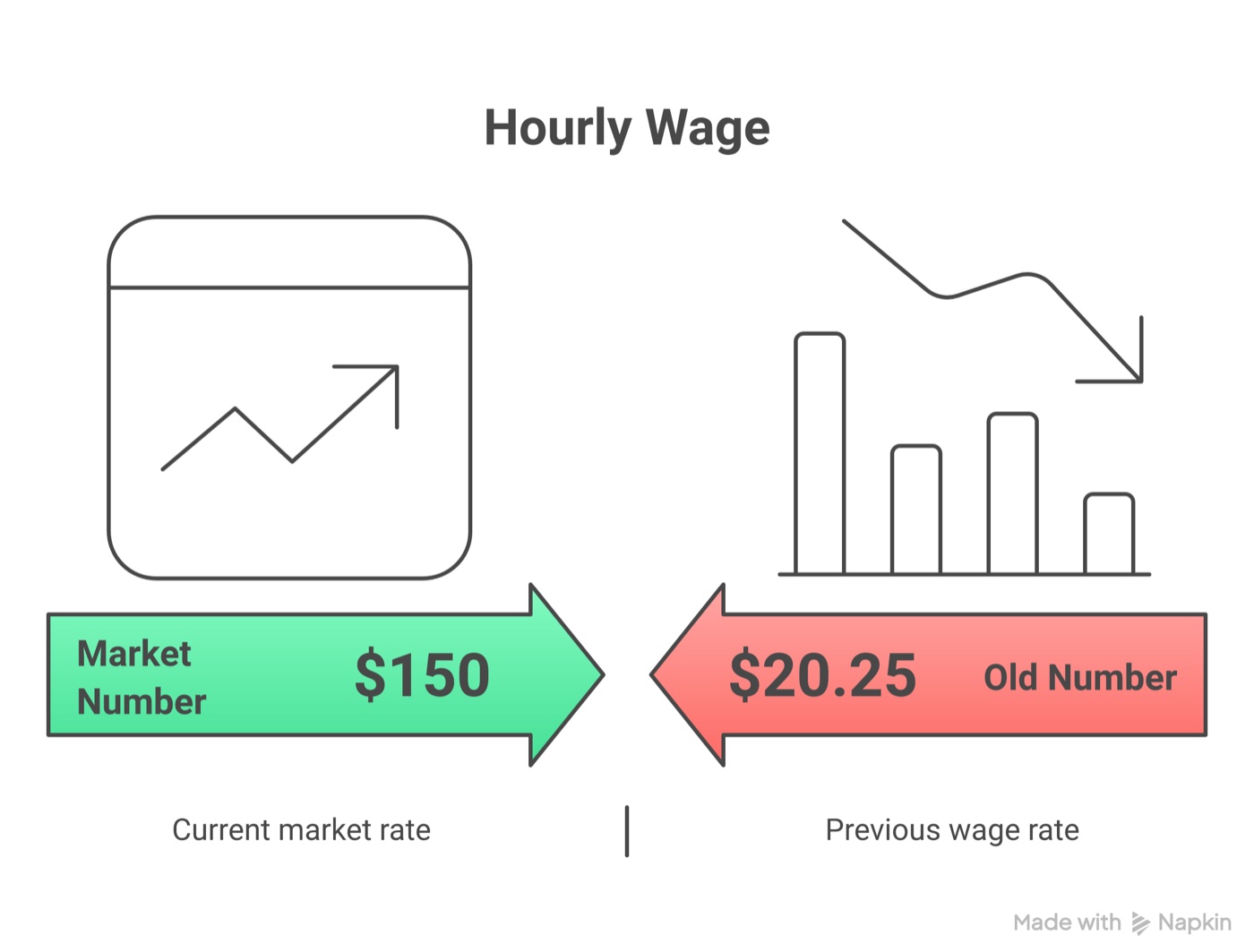
$150 an hour.
My own head called it crazy. I just wanted $20.25 an hour at one time. And here I am asking for $150 an hour.
Both of those numbers are mine. One is from the market. One is from the trailer.
What I did instead of flinching
At $150 an hour, two hundred plus hours pencils out north of $30,000. I didn't send that number and hope.
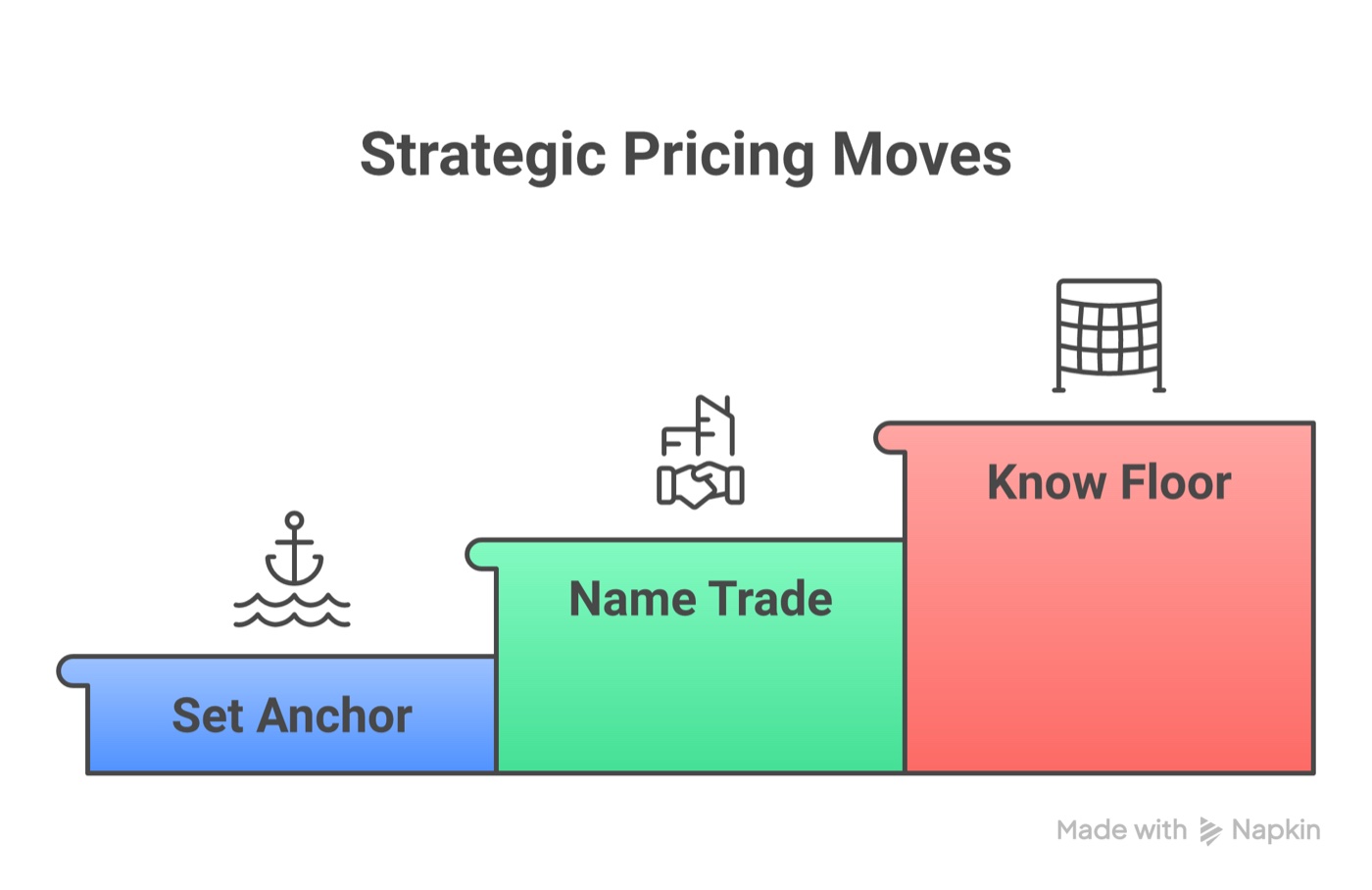
I made three moves. They're teachable, so take them.
I anchored high. I named the trade out loud and then I took the bare minimum of what I felt my skill set was worth.
The deal signed at $16,000, paid in full. On purpose. Not hourly, not a monthly drip. I wanted the cash up front because I wanted to invest it straight back into the business, and I said exactly that to the client.
Honestly? I probably still took less than I was worth but it was a fair amount, I named why, and it closed. That's a different universe from discounting because you flinched.
The Anchor, the Trade, and the Floor
Run this action before your next quote goes out…
1. Set the anchor from the skill set, not the history
Calculate what the work is worth at your actual skill level. Not what you charged last year. Not what the old job paid you.
Say the number out loud before the call. If you can't say it alone in your truck, you won't say it to a buyer.
2. Name the trade
If you come down from the anchor, the discount has to buy you something, and you have to say what.
Paid in full. A faster start date. Cash you can reinvest. A longer commitment.
Name it out loud, to the buyer. "I'll do it at this number because it's paid up front." Now the discount is a decision with a reason. Silence is what turns a discount into a flinch.
3. Know your floor before you dial
Decide the number you will not go under before the conversation starts.
Not during. Before. A floor picked mid negotiation is just a mood.
The anchor is what the work is worth. The floor is where the deal stops making sense for your business. Two different numbers, two different jobs. If a buyer pushes past your floor, the answer is a smaller scope, or a warm no. Both beat resenting a client for a price you agreed to.
What it fixes: the quote stops being a referendum on your worth and becomes arithmetic.
What it costs: one uncomfortable minute of saying a big number out loud.
What breaks without it: you price off the old number forever, and the gap compounds every job you sign.
The same math from the buyer's chair
I want to show you the other side of this, because I lived it last month too. As the buyer.
I've been following a mentor of mine, Matt Gray, for about a year. Started on his free content, binging the videos. Then the monthly workshops. Then I spent $1,500 to enter one of his programs, and I executed what it taught. That work generated another sale.
So when the sale landed, I took it straight back to him and asked one question. Would it be possible to roll what I've already paid into the higher program as I continue to grow with you?
Look at what happened there. Nobody dragged me up that ladder. I climbed it happily, rung by rung, because every rung paid for the next one, and because the trade was clear at every step. Now I am paying him nearly $4,000/mo & traveling to the dolomites for a retreat in October.
Free < $1.5K < $7K < $50K < Dolomites. Crazy.
That's what your buyers want to do with you. They're looking for a rung that proves the next rung. Price like the ladder exists. Give them a first step that works, name what each step buys, and the good ones climb. Shoutout to Drewbie for the talk about this today even on his low tickets for CALL THE DAMN LEADS (check out his brand & merch)
The buyers who only ever want the bottom rung at half price?
Those were never your buyers.
They're the floor's job to filter.
The war under the math
I want to be straight about what this actually is, because it isn't a pricing tactic.
Even now, with the business working, the internal question shows up: am I who I said I can be? Am I the right person to lead this?
That question doesn't go away when the revenue shows up.
It only gets louder, because now there's something to lose.
I know you feel that because you are an entrepreneur.
Underpricing is how that question hides. Every low quote is protection money paid to a number from your childhood, and it feels like humility while you're doing it.
The work in front of you is the answer. Do the work, hold the floor, and let the evidence argue with the ceiling. It wins eventually.
It's also why I keep a mentor in my corner while I do it. He's built this before, and borrowed conviction is still conviction on the days your own runs short.
Your buyer never met the kid who wanted $20.25 an hour.
Stop making them pay his rate.
Charge what you are worth.
Flat Businesses Guess. 3D Businesses Grow.
Two paths from here
Path one: before your next quote, run the three moves. Anchor from the skill set. Name the trade. Set the floor before you dial. That's it. No software, no course.
Path two: if you suspect the underpricing runs deeper than one quote, that's what the free Revenue Growth Audit finds. We walk your numbers end to end, including what your close rate says you could be charging. You keep the plan either way.
Build it so it runs without you.
Acesa
P.S. Next Tuesday: two companies I sat with this summer, both profitable, both one phone call from a very different year. And the fifteen-minute check that shows you if you've made the same bet without noticing.
P.P.S. Hit reply and tell me the number your head still charges. Mine was $20.25.
LinkedIn · Facebook · Instagram · YouTube · X · Website
Rebel Growth Labs · Columbus, OH
