

Hey there,
I sat with two young companies this summer. A general contractor out of Boise. A CPA firm out of Dallas.
Both profitable. Both working hard. Both growing.
I asked each of them the same question. Are you on track?
Neither one could answer it.
Both of them are good operators. Nobody ever gave them a way to see it. They could see money coming in. They couldn't see whether they were on track, off track, or leaving money behind.
Those are three different businesses wearing the same bank balance.
And when an owner can't see the difference, they all reach for the same lever.
More leads.
The question that runs your mornings
I hear it on almost every audit call.
Do I have leads coming in?
Are leads coming in today?
I get why. Leads feel like oxygen.
But the sharper question is what happens to the leads you already paid for.
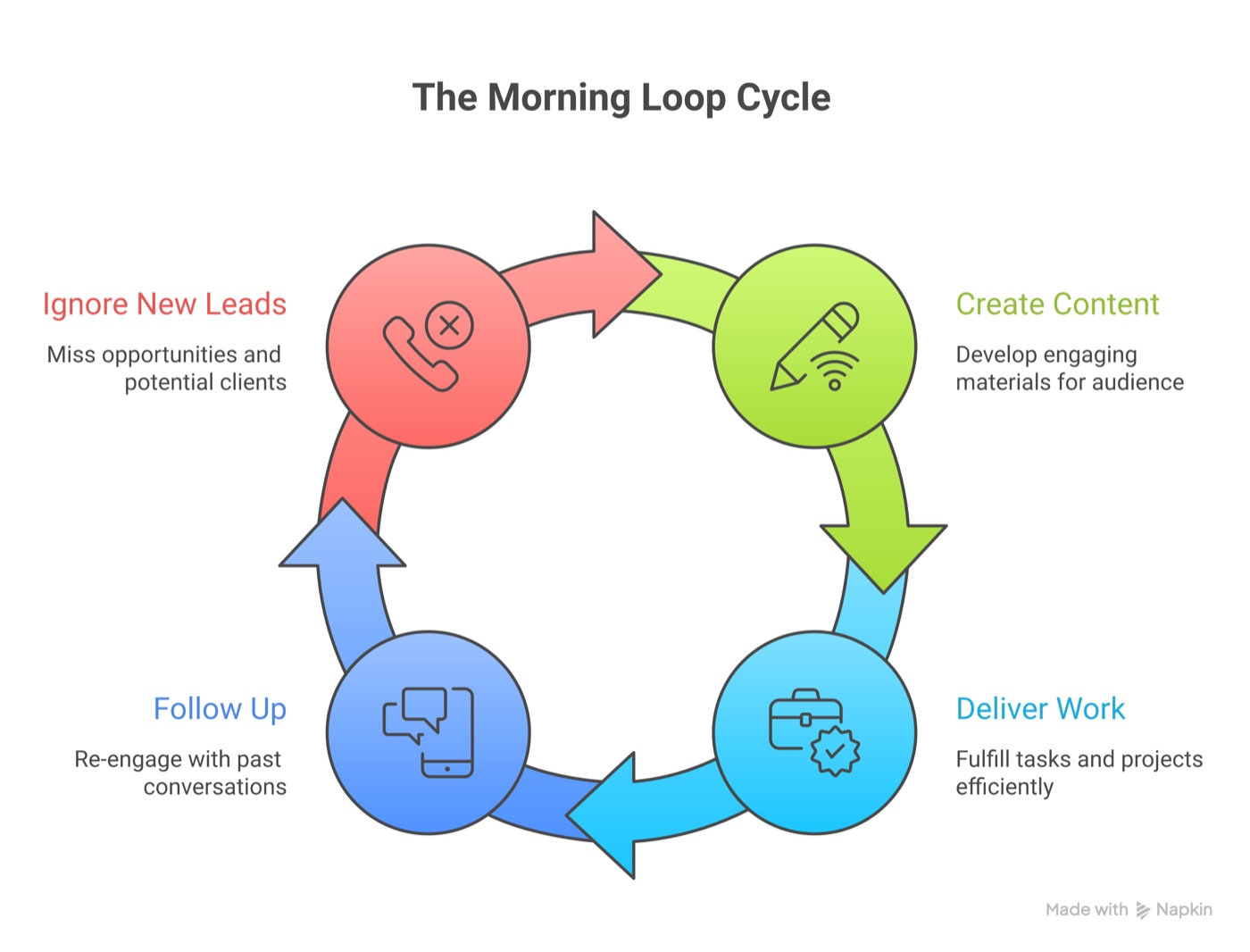
Here's your actual morning. You wake up. You create content. You post the content. You follow up on the conversations you started yesterday. You deliver the work you sold last month.
And meanwhile, nobody's picking up the phone. Nobody's calling the new leads.
You're the whole company, and the phone lost the vote.
The number I keep finding
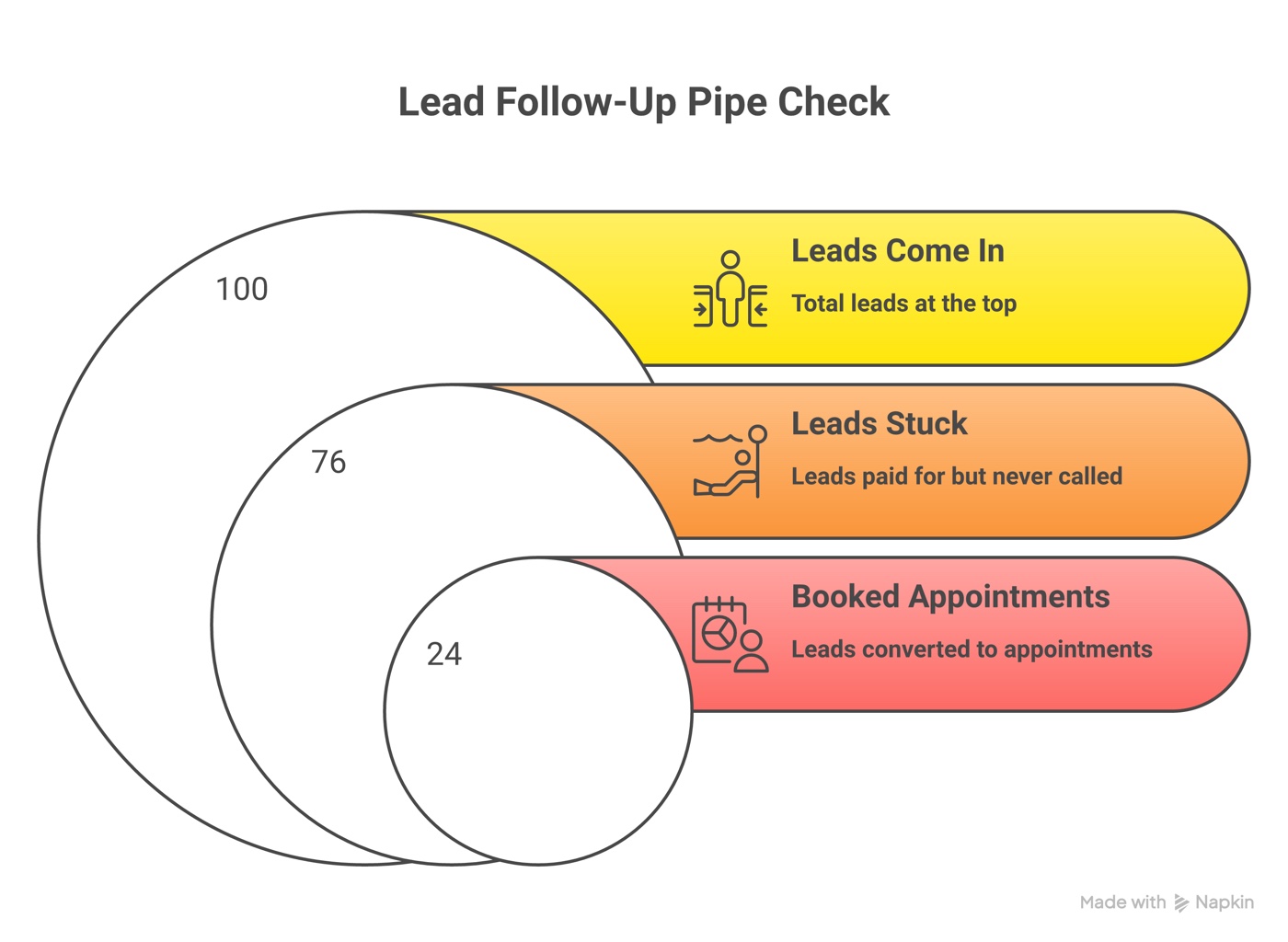
Across the businesses we audited, the lead-to-appointment rate keeps landing between 20 and 29 percent.
Healthy is around 40.
Sit with what that means. Out of every 100 leads you paid for, roughly 24 turn into a booked conversation. The other 76 got a voicemail. Maybe a text. Then the day got loud and they got quiet.
That's a pickup problem.
And it's the best news on this page, because the fix isn't a bigger ad budget. The money is already sitting in your pipe.
Steal the check we run on every audit. Takes one evening.
The Pipe Check
Three steps. Last month's numbers and a calculator.
1. Count what actually got worked
Pull every lead from last month. Count how many turned into a set appointment.
Appointments divided by leads. That's your rate.
If you land between 20 and 29 percent, you're right where most of the businesses we audit sit. Which means the cheapest revenue you'll find this quarter is already in your CRM, going cold.
Now pull the ones that never booked. That's your working list for the week.
Sort it newest first. A lead from last week still remembers filling out your form. A lead from March needs a different conversation, so don't start there. Start where the memory is warm.
And before you touch the phone, look at what a lead on that list already cost you. You paid for the click, the form, the follow-up software. Every name on it is money you already spent. Working the list is just collecting it.
2. Call when they can answer
This is the part almost nobody does, and it's free.
Your buyer has a calendar. A contractor is on a build site all morning. He's not answering at 9am. He can talk in the afternoon. The gym owner is the opposite. And in some industries, texting isn't a real option at all. You need to call them.
Know your avatar at that level of detail. When they pick up, not just who they are.
Write the windows down. Literally two lines on a sticky note. "My buyer answers 1pm to 4pm. My buyer never answers before 10." That note is worth more than most of the software you're paying for, because every call made outside those windows was a call made for practice.
Then move your follow-up blocks to match their calendar instead of yours. Yes, that might mean your call block sits at 2pm when you'd rather be quoting. That's the trade. The quote can move. The window can't.
3. Put revenue in first position
The two companies I opened with didn't lack effort. They lacked gauges.
So build the rhythm. Once a month, ask one question: how did I finish versus last month's trend? Every 13 weeks, look further out. Are the next 90 days on track, off track, or better than planned?
Monthly tells you where you are. The 13-week look tells you where you're headed. Owners who skip both are driving to a destination they've locked in, with no gauges on the panel.
(Want to know which gauges you're missing? The Five Numbers Test scores you on the five I check first. Free, about five minutes.)
What it fixes: you stop buying leads to solve a problem three steps downstream.
What it costs: one evening, and moving your call blocks to hours you didn't pick.
What breaks without it: you keep paying for 100 and working 24, and the 76 quietly buy from whoever called them back.
What one week of this looks like
Monday night, run the division and pull your list. Twenty minutes.
Tuesday through Thursday, one call block a day, sitting inside your buyer's window. Not all day. One block. Newest leads first, and the only goal on the board is appointments set. Not deals. Not quotes. Appointments.
Friday, count them.
That's the whole experiment. No new spend, no new software, no new hire. Just the leads you already bought, called at the hour they actually answer.
Then run the same division next month and watch the rate. Every point it climbs is revenue you were already paying for and finally collecting. That's what designed revenue looks like.
The part I want you to hear
Both of those owners thought they needed more leads. Both were wrong in the best possible way.
They didn't know they didn't have that problem. They just didn't know how to diagnose it. Nobody ever showed them the math. They were too busy building the thing.
Zero judgment. That was me once too.
And I'll tell you what both of them did next, because it's the part that separates operators who fix this from operators who nod at it. They asked to see every step it takes to get someone from a click to a customer. On one screen. Left to right. Then they put money behind building exactly that.
Once you can see the whole path, the leads stop being a mystery and start being math.
Buy more leads later. Pick up the phone first.
Flat Businesses Guess. 3D Businesses Grow.
Two paths from here
Path one: run the Pipe Check yourself tonight. Last month's leads, appointments set, one division problem. Then move your call blocks to your buyer's calendar and watch what one week does.
Path two: run it with me. That's the free Revenue Growth Audit. You bring last month, I walk your funnel left to right, and we find where the money's sitting. The plan is yours whether we ever work together or not.
Build it so it runs without you.
Acesa
P.S. Next Tuesday: a client signed, and their logo was on our landing page before the kickoff call. Nobody on my team touched it. One prompt. I'll show you the rule that makes that normal now.
P.P.S. If you don't know your lead-to-appointment rate off the top of your head, that's the whole point. The Five Numbers Test takes five minutes and shows you which gauges you're flying without.
LinkedIn · Facebook · Instagram · YouTube · X · Website
Rebel Growth Labs · Columbus, OH
